Case study • May 12, 2023
Maarch Courrier in France’s Regional Health Agencies: The ARS Grand Est Case Study
This article has been viewed 29 times

The Grand-Est Regional Health Agency
Regional Health Agencies (ARS) are public institutions funded by the State, National Health Insurance, and the National Solidarity Fund for Autonomy. These institutions are placed under the authority of the Ministry responsible for health and social affairs.
Like other ARS, the ARS Grand Est aims to ensure unified health management across its territory, better meet the needs of the population, and increase the efficiency of the system. In practice, one of its roles is to modernize and streamline healthcare provision and ensure sound management of hospital and medical costs.
During the COVID-19 coronavirus crisis, the Regional Health Agencies (ARS) played a leading role at the local level, in organizing care, testing initiatives, and lockdown-easing measures.
The ARS Grand Est operates across 11 sites:
- Alsace: Colmar and Strasbourg
- Lorraine: Epinal, Nancy (2 sites), Bar-le-Duc, Metz
- Champagne-Ardennes: Troyes, Chaumont, Châlon en Champagne, Charleville-Mézières.
A project launched amid the turmoil of COVID
The project was awarded to Maarch through a public tender in December 2020, for an amount of €41,300 excl. VAT over 3 years.
Because of its open and open-source nature, the Maarch Courrier software had been targeted from the outset with an on-premise installation in mind, and the ARS would not have taken the risk of working with any organization other than the publisher or a certified integrator for this critical project.
The original aim of the project was to relieve the pressure on the Director General’s secretariat, which had to open and distribute an average of 100 pieces of mail every day.
The Mail Department had to be reorganized so that it could digitize all incoming mail, with clearly identified exceptions such as confidential correspondence, correspondence containing medical data, and involuntary psychiatric care orders.
Distribution is handled through Maarch Courrier, whose benefits are well known: reliability, speed, security, and search performance.
The restructuring of the Mail Department was originally planned to be outsourced, but the ARS ultimately chose to train its existing teams.
The training sessions were conducted by our partner Docaposte, for:
- 2 functional admins at the IT department
- 4 mail operators
- 40 referents
The 40 referents attended mentoring sessions, 53 in total, spread across different days of the week to accommodate remote-work schedules. Each referent received 3 half-day training sessions making up one session.
Each referent received 3 half-day training sessions making up one session.
- Session 1: Understanding the project and its stakes, and outlining the training content
- Session 2: Presentation of the organizational chart and profiles for each department, using a configuration sheet extracted from Maarch and adjusted by the referents
- Session 3: Hands-on training with the tool in real conditions.
A member of management was systematically present at the first session to reinforce the message and present the stakes.
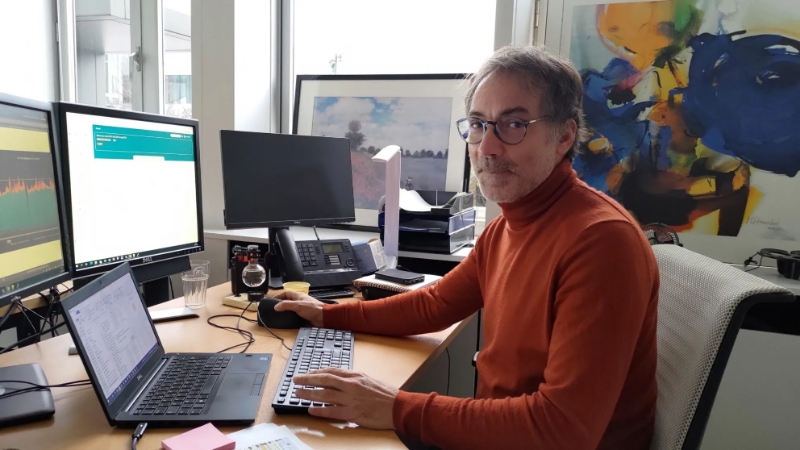
Stéphane DRAN, Mail Project Manager at ARS Grand Est
A fast-paced start to support remote work
While the initial plan called for a 12-month rollout, management shortened the timeline to 6 months. Indeed, at that time, in the midst of the COVID crisis, 80% of staff were working remotely. During this period, no fewer than 735 staff members were onboarded onto the Courrier application.
Mail Project Manager Stéphane DRAN still remembers it well:
« The ramp-up was intense, with up to 4 departments per week being onboarded onto the system »
The pilot phase focused on the General Secretariat in Q4 2021, with a ramp-up plan originally meant to span all of 2022. It was shortened by Management so that the entire rollout would be completed by the end of the first half of 2022. We can say that we are now at cruising speed.
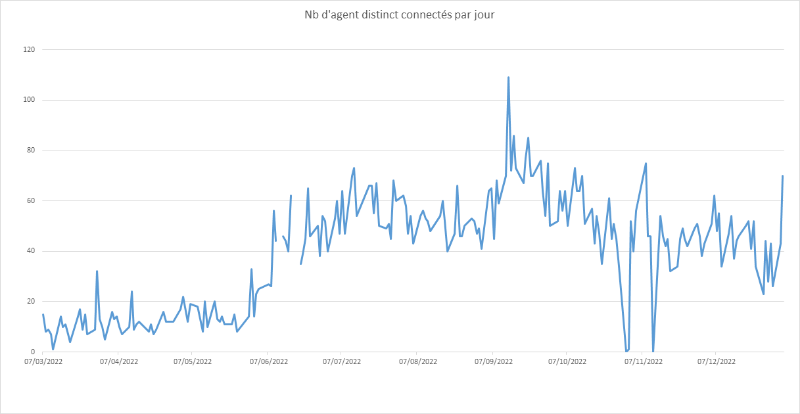
Here we see the ramp-up in usage, showing the average number of unique users connected, out of a total of 735 staff members.
A project launched amid the turmoil of COVID
Stéphane DRAN was highly invested in the project and, with Maarch’s support, developed monitoring tools specific to the ARS.
From Maarch Courrier’s history logs, he extracts weekly information such as:
- The number of returned mail items
- The start and end times of scanning and qualification
- The number of active operators
- The number of staff connected to the GEC per day
He put together an FAQ of around forty points, drawn from weekly meetings with the referents over the first two months following the completed rollout. These meetings made it possible to carry out final adjustments, such as reducing the number of queues on certain profiles.
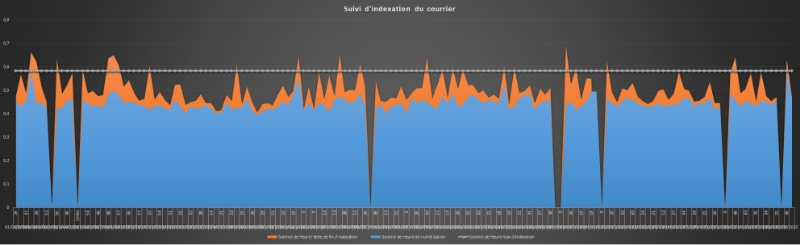
By cross-referencing Maarch’s historical data with time-tracking records, we obtain interesting data on the split between mail preparation/digitization time (in blue) and qualification time (in orange).
In conclusion
Maarch brought its 15 years of expertise in mail management projects across all kinds of organizations, and managed to keep its teams engaged despite the disruptions caused by COVID.
A successful project requires strong commitment from management and an engaged, competent project leadership.
This winning combination was present on the ARS Grand Est project.
The ARS Grand Est is supported under an evolutive maintenance contract, on a standard, certified version of Maarch Courrier. An upgrade to version 2301 is naturally planned for mid-year.
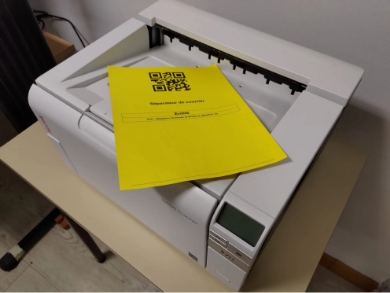
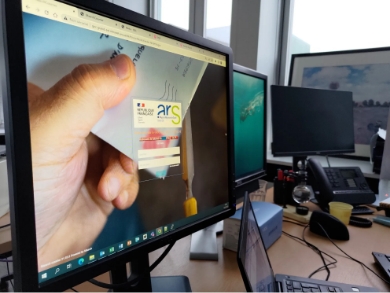
The Kodak i3400 scanner with Maarch’s cardboard separator sheets.
Customized home screen of the Maarch Courrier application

Maarch Courrier
Take mail management to the next level, with advanced data controls and an intuitive interface.
Learn more →Dive deeper into the Maarch ecosystem







Choose the open-source reference
More than 100,000 users already trust us!